

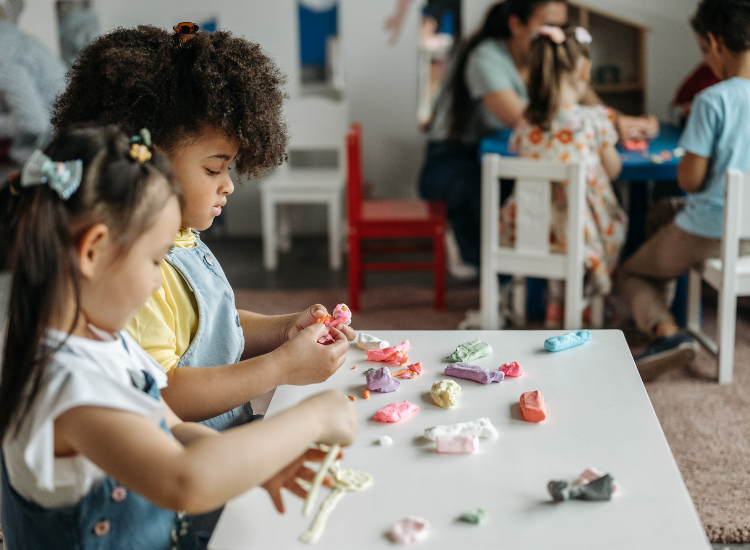
Should I choose nursery or preschool?
When deciding nursery vs preschool, consider your child’s age, the hours of care you need and whether school readiness is becoming a priority. Nurseries often provide longer, year-round childcare for younger children. Preschools typically cater for children aged 2–5, combining play with structured learning that prepares them for primary school.
The nursery vs preschool decision isn’t about finding which type of setting is universally better. Instead, it’s about finding the environment that works for your child and family. Your child’s age, personality and development all matter. So do your childcare requirements. Asking the right questions can make choosing an early years setting much easier.
1. Nursery or Preschool: How Old Is Your Child?
Age is a good starting point when comparing a nursery or preschool.
Day nurseries often accept babies from around six months and continue caring for children until they start school. This makes nursery particularly useful for parents who need childcare from infancy.
Preschools focus more specifically on the years before primary school. Stepping Out Preschool, for example, welcomes children aged 2–5.
If your child is moving beyond the toddler years, think about what you want from their next setting.
2. What Hours of Childcare Does Your Family Need?
Your family’s routine can influence the nursery vs preschool choice considerably.
Nurseries often open for longer hours and throughout much of the year. Therefore, they may suit parents who need extended childcare around their working hours.
Preschools commonly follow a more school-like timetable and may operate during term time. Some also provide a choice of sessions.
Stepping Out Preschool offers half and full days, allowing families to choose sessions that suit their requirements.
3. Is School Readiness Becoming a Priority?
Consider Your Child’s Next Step
This is where the preschool and nursery difference can become particularly important.
Preschool acts as a bridge between a child’s earliest years and primary school. Children continue learning through play, while also becoming familiar with greater structure and routine.
For example, they practise listening, following instructions and participating in group activities. They also develop early literacy and numeracy through age-appropriate experiences.
These aren’t simply academic skills. Confidence, communication and independence can be just as valuable when a child enters Reception.
4. Would Your Child Benefit from More Independence?
Starting school brings many small changes.
Children need to communicate their needs, make choices and manage simple tasks with increasing independence.
A good preschool creates opportunities to practise these skills throughout the day. Children can select activities, look after resources and become increasingly confident within a group.
Therefore, when considering nursery or preschool, think about the environment that best supports your child’s next stage of development.
5. How Does the Setting Balance Learning and Play?
Preschool should never mean replacing childhood with formal lessons.
The Early Years Foundation Stage (EYFS) recognises the importance of learning through exploration, communication and play.
At Stepping Out Preschool, children have access to a wide range of resources that encourage creativity and imagination. They also enjoy free-flow access to a secure outdoor garden.
Activities support children’s development while giving them opportunities to explore their own interests.
6. Can the Setting Support Your Individual Child?
Every child develops differently, so look beyond the basic nursery vs preschool comparison.
Ask how staff respond to different personalities, abilities and developmental needs. If your child has additional needs, discuss how the setting will work with you to provide appropriate support.
Stepping Out is a diverse preschool that welcomes children of all abilities. Our staff have many years of experience working with children, including those with additional needs.
Strong relationships between families and practitioners help children feel secure and understood.
7. How Does It Feel When You Visit?
Research is useful, but nothing replaces visiting an early years setting yourself.
Look around the environment. Meet the practitioners and ask questions. Consider whether children appear happy and engaged.
Most importantly, think about whether you can imagine your child feeling comfortable there.
A visit can turn an abstract nursery vs preschool decision into a much clearer choice.
Choosing the Right Setting for Your Child
There is no single answer to the preschool or nursery question.
A nursery may suit a younger child or a family needing longer, year-round care. However, for children aged 2–5 who are approaching primary school, preschool can provide a valuable combination of play, learning, independence and school preparation.
If you’re considering your child’s next step, we’d love to welcome you to Stepping Out Preschool in South Norwood.
Contact us to arrange a tour, meet our experienced team and discover whether Stepping Out Preschool feels right for your family.
Frequently Asked Questions
What is the main difference between nursery and preschool?
Nurseries often provide longer childcare for younger children, while preschools focus more closely on preparing children for school.
Is nursery or preschool better for a three-year-old?
It depends on your family’s needs, although preschool can be particularly valuable when school readiness becomes a priority.
Does preschool involve formal lessons?
No, preschool combines structured activities with play-based learning appropriate to children’s age and development.
What age is preschool suitable for?
Preschools generally cater for children in the years before primary school; Stepping Out welcomes children aged 2–5.
How can I decide between nursery and preschool?
Consider your child’s age, childcare needs, development and school readiness, then visit potential settings before deciding.